phone: +420 776 223 443
e-mail: support@londoncreative.co.uk
Showing posts with label sarang burung layang-layang. Show all posts

Sunday, April 15, 2012

Malaysia to sign bird's nest deal with China

KUALA LUMPUR - Malaysia will sign a draft protocol with China to resume bird's nest export to China which was halted last year over a safety concern.
Agriculture and Agro-based Industry Minister Noh Omar was quoted by state news agency Bernama as saying on Sunday that both countries will sign the protocol as they have agreed on three key conditions in the latest negotiation.
Malaysian bird's nest exporters are required to get certifications from the Health Ministry and the Veterinary Department and an identification from the Multimedia Commission that traces the origin of the bird's nests through radio frequency to ensure that the edible bird's nests are authentic and safe for consumption.
The ministry could not confirm when the draft protocol would be signed.
Edible bird's nests, made of the secretion from the salivary glands of swiftlets, has been used traditionally in Chinese cooking for centuries.
China banned bird's nests imports from Malaysia  one of the world's largest bird's nests producers, after it found last July excessive nitrite in counterfeit blood nests, a rare kind of bird' s nests.
Noh said the ban caused Malaysia's bird's nest market price to plunge sharply.
Many traders also had difficulties servicing their bank loans, he added.

SUMBER

Saturday, April 14, 2012

Misi!!

  1. Memastikan industri burung walet ini boleh diceburi oleh semua rakyat walaupun bermodalkan kewangan yang sedikit
  2. Membantu Rumah Burung Walet (RBW) yang tidak dan kurang berjaya pulih seperti yang diharapkan (dengan berkat dan keizinan daripada ALLAH SWT)
  3. Berkongsi ilmu tentang industri tanpa mengira siapa pun
  4. Berterusan menjalankan R&D dan menambahkan ilmu,pengetahuan dan pengalaman bersama-sama.

Visi!!

"Where your swiftlet dreams come true"

Tuesday, April 10, 2012

Malaysia to sign bird's nest deal with China

KUALA LUMPUR - Malaysia will sign a draft protocol with China to resume bird's nest export to China which was halted last year over a safety concern.
Agriculture and Agro-based Industry Minister Noh Omar was quoted by state news agency Bernama as saying on Sunday that both countries will sign the protocol as they have agreed on three key conditions in the latest negotiation.
Malaysian bird's nest exporters are required to get certifications from the Health Ministry and the Veterinary Department and an identification from the Multimedia Commission that traces the origin of the bird's nests through radio frequency to ensure that the edible bird's nests are authentic and safe for consumption.
The ministry could not confirm when the draft protocol would be signed.
Edible bird's nests, made of the secretion from the salivary glands of swiftlets, has been used traditionally in Chinese cooking for centuries.
China banned bird's nests imports from Malaysia  one of the world's largest bird's nests producers, after it found last July excessive nitrite in counterfeit blood nests, a rare kind of bird' s nests.
Noh said the ban caused Malaysia's bird's nest market price to plunge sharply.
Many traders also had difficulties servicing their bank loans, he added.

SUMBER

Monday, April 9, 2012

Malaysia, China to sign bird nest draft protocol

Posted on April 9, 2012, Monday
MUAR: Malaysia will sign the draft protocol on bird nest entry into China soon to resume export of the luxury item to the country which has been halted several months ago.
The Minister of Agriculture and Agro-based Industry, Datuk Seri Noh Omar said the three main conditions for the resumption of bird nest export to China had been agreed upon in the latest negotiation between the two countries.
He said among the conditions were that Malaysian bird nest exporters must have the Radio Frequency Identification certificate issued by the Malaysian Communications and Multimedia Commission (MCMC) to detect the locations of problematic bird nest using radio wave frequency.
Two more conditions, he said were the Veterinary Department’s certificate of health and the Ministry of Health’s health certificate.
“The measures are to ensure bird nest products for export to China are not only from healthy birds but the product is also safe for consumption,” he said when opening the Bakri Parliamentary Constituency Farmers’ Organisation annual general meeting at Maktab Rendah Sains MARA, Bakri, Muar here on Saturday.
He said the halt to the entry of Malaysian bird nest into China resulted in many operators facing problems.
“The market price of bird nest plunged from RM4,000 and   RM5,000 to only RM1,500 per kilogramme. Many faced problems in servicing their bank loans,” he said.
Elaborating further on the new conditions, Noh Omar said only products which met the conditions would be permitted to use the ‘Malaysia Best ‘ logo if they were to be exported.
He said the logo was also to prevent Malaysia from becoming a transit for bird nest from other countries banned from entering the market in China. — Bernama

Kg Gajah!! Another Successfull Revamp!!


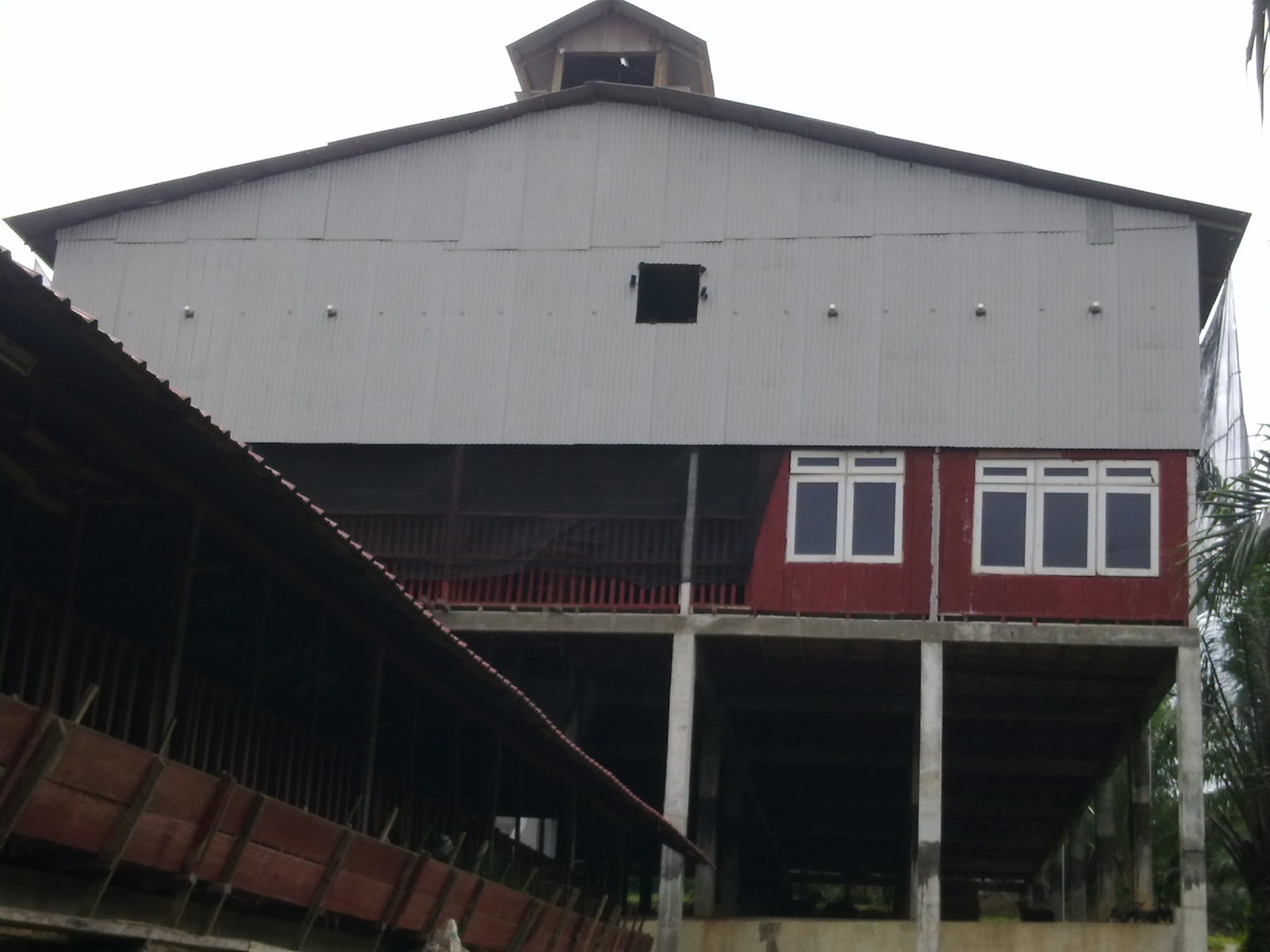
 Rupa Asal RBW Kg. Gajah

Gambar di atas menunjukkan gambaran asal RBW Kg. Gajah.. RBW ini didirikan di atas sebuah kandang kambing dengan menggunakan atap asbestos sebagai keseluruhan strukturnya bersama-sama kayu sebagai tiang dan lantai.
Namun, atas faktor mikro habitatnya (suhu yang tinggi@panas dan kelembapan yg renda) yang tidak tepat dan tata ruang lubang masuknya (terlalu tinggi dan kecil) menyebabkan agak sukar untuk memikat burung walet masuk setelah hampir setahun lebih beroperasi.
Ini menyebabkan beberapa pengubahsuaian harus dilakukan.

Antara pengubahsuaian yang telah dilakukan:
  1. LMB(bahagian luar) telah ditukarkan kebawah bertentang dengan roving roomnya
  2. LMB(bahagian dalam) pula ditukar di sebelah kiri roving room, LMB(bahagian dalam) yang lama ditutup untuk mengelakkan cahaya yang terlalu banyak masuk.
  3. Di bahagian dalaman (nesting room) pula dibuat satu lapisan berjarak 3 kaki daripada dinding asal di mana lapisan ini dilengkapi dengan teknologi "ThermaSwift". Penggunaan "ThermaSwift" ini dapat menurunkan kadar suhu dalamannya dan meningkatkan kadar kelembapan sekaligus menstabilkan mikro habitat RBW itu mengikut mikro habitat seperti di dalam gua dan bertepatan dengan 1GP yang telah dikeluarkan.
  4. Sistem bunyi@suara nya pula di upgrade menjadi sistem "Power Sound" kami dimana menggunakan 2 suara luar dan 2 suara dalam
  5. Beberapa sarang palsu diletakkan dan penggunaan nature aroma di dalam nesting room dan pada sarang palsu tersebut.
Alhamdulillah....hasilnya sangat memberangsangkan...burung mula berkerumun bermain di persekitaran RBW dan mendekati LMB. terdapat sebanyak 8 ekor telah masuk dan tidur didalamnya selepas hampir 2 minggu beroperasi semula dengan wajah baru (revamp).

p/s:gambar atau video akan di update kemudian, xberkesempatan dengan beberapa masalah teknikal.tq

yang berminat sila hubungi:
013-22.77.0.60 Rahimi

Sunday, April 8, 2012

Bird Nest Plus!!!


Kegunaan :
  • Mencantikkan kulit daripada segalam masalah yang berkaitan kulit ( jerawat & jeragat )
  • Pengambilan semasa kehamilan dapat mengurangkan rasa sakit pada punggung dan mempercepatkan proses penyembuhan setelah melahirkan bayi, pembentukan badan serta memperbaiki tisu yang rosak
  • Untuk Orang Berumur, pemakanan secara teratur dapat menguatkan urat dan tulang serta meningkatkan daya tahan tubuh terhadap penyakit
  • Membaiki sistem pernafasan dan sangat baik bagi mereka yang menghidapi ASMA & BATUK!
Kandungan :
  1. Sarang Burung Walet
  2. Serbuk Mutiara
  3. Kolagen
  4. Stevia
  5. Madu
Cara Penggunaan :
  • 1 sudu pagi sebelum sarapan dan 1 sudu sebelum tidur
NOTE!!! Sudu Besi TIDAK sesuai digunakan

Harga : RM 78 (tidak termasuk postage)

yang berminat sila hubungi :
013-22.77.0.60 Rahimi

Walit Plus - IQ


Kegunaan :

  • Membantu Meningkatkan Kecergasan
  • Meningkatkan Kemampuan Minda
  • Meningkatkan Daya Tahan Badan dan Kesihatan Secara Menyeluruh
  • Membantu Penyerapan Nutrisi pada setiap makanan
  • Meningkatkan Daya Tumpuan
  • Meningkatkan Daya Ingatan
Kandungan :
  1. Sarang Burung Walet
  2. Serbuk Mutiara
  3. Kismis
  4. Kolagen
  5. Stevia
  6. Madu
  7. Za'faran
Cara Penggunaan :
  • 1 sudu pagi sebelum sarapan dan 1 sudu sebelum tidur
NOTE!!! Sudu Besi TIDAK sesuai digunakan

Harga : RM 168 (tidak termasuk postage)

Yang berminat sila hubungi :
013-22.77.0.60 Rahimi

Walit Plus - Mirifica!!!


Kegunaan:

  • Membesarkan Saiz Payudara
  • Menegangkan Payudara
  • Mencantikkan Payudara
  • Menyihatkan Rambut
  • Membekalkan Hormon Estrogen
  • Mengurangkan Kesakitan dibahagian Dada
Kandungan:
  1. Sarang Burung Walet
  2. Serbuk Mutiara
  3. Kolagen
  4. Stevia
  5. Madu
  6. Peuraria Mirifica
Cara Penggunaan :

  • 1 sudu pagi sebelum sarapan dan 1 sudu sebelum tidur
NOTE!!! Sudu Besi TIDAK sesuai digunakan

Harga : RM 168 (tidak termasuk postage)

Yang berminat sila hubungi :
013-22.77.0.60 Rahimi

Walit Plus - Butea Superba!!!


" Butea Superba merupakan sejenis ubi ajaib yang sijumpai di kawasan utara Thailand"

Kegunaan :

  • Membesarkan dan memanjangkan saiz diameter zakar
  • Meningkatkan kepuasan seksual
  • Memulihkan saluran-saluran darah dan urat saraf di zakar seperti Copora Cavernosa dan Corpus Spongiosum

Kandungan :
  1. Sarang Burung Walet
  2. Serbuk Mutiara
  3. Kolagen
  4. Stevia
  5. Madu
  6. Cordyceps
  7. Tian Qi
Cara Penggunaan :

  • 1 sudu pagi sebelum sarapan dan 1 sudu sebelum tidur
NOTE!!! Sudu Besi TIDAK sesuai digunakan

Harga : RM 168 (tidak termasuk postage)

Yang berminat sila hubungi :
013-22.77.0.60 Rahimi

Walit Plus M7!!


Kelebihan / Kebaikan :

  • Peredaran Darah yang teratur
  • Meningkatkan Tenaga Seksual
  • Baik untuk Masalah Sirosis
  • Sistem Kardiovaskular yang baik
  • Membaik pulih Luka dan Parut
  • Masalah lumpuh anggota badan

Kandungan :
  1. 2 Sarang Burung
  2. Tian Qi
  3. Ginseng
  4. Cordyceps
  5. Q-10
  6. Rock Sugar
Cara Penggunaan :
  • 1 sudu pagi sebelum sarapan dan 1 sudu sebelum tidur
NOTE!!! Sudu Besi TIDAK sesuai digunakan

Harga : RM 360 (tidak termasuk postage)

Yang berminat sila hubungi :
013-22.77.0.60 Rahimi

PROMOSI !!!Ayuh dapatkan sekarang!


PROMOSI!!!

Kepada yang berminat boleh hubungi: 013-22.77.0.60 Rahimi


Thursday, April 5, 2012

China lifts import ban on bird's nests from Malaysia

GOOD NEWS: Nitrate content must not exceed 30 parts per million

.
Prime Minister Datuk Seri Najib Razak making a courtesy call on Guangxi province party secretary Guo Shengkun (right) in Nanning yesterday. Bernama pic
CHINA is prepared to lift the ban on the export of Malaysia's birds nest, provided its nitrate content does not exceed 30 parts per million (PPM).
Prime Minister Datuk Seri Najib Razak said the good news was conveyed to him by his Chinese counterpart, Wen Jiabao, during their bilateral meeting here.
"The nitrate level in bird's nest from Malaysia is not acceptable to China," Najib said before returning to Kuala Lumpur after a one-day working visit here.
He said the requirement imposed by the Chinese government would be conveyed to bird's nest operators in Malaysia.
In the meeting with Wen, Najib conveyed AirAsia's plan to introduce a flight to Nanning to boost trade and improve people-to-people ties between the countries.
The Chinese government supports the plan and will help AirAsia on the commencement of flights.
The two leaders agreed on the need to intensify programmes involving youth in Malaysia and China.
Najib said Youth and Sports Minister Datuk Ahmad Shabery Cheek would lead a delegation of 150 youth leaders from Malaysia to visit China this month.
Najib, who arrived here at 1am yesterday with his wife, Datin Seri Rosmah Mansor, had a packed itinerary during his visit.
He began the day by receiving a courtesy call by Guangxi province party secretary Guo Shengkun and Governor Ma Biao at the Marriott Hotel.
This was followed with the meeting with Wen at the Li Yuan Resort, where they discussed matters of mutual interest as well as regional and global issues. It was the third meeting between the two leaders over the last 12 months since Wen's visit to Kuala Lumpur in April last year. They met again in the southern capital of Guangzi province five months ago during the China-Asean Exhibition.
Their meeting was cordial, reflecting the commitment by both leaders to boost economic cooperation between both countries.
Present at the meeting were International Trade and Industry Minister Datuk Seri Mustapa Mohamed and special envoy to China Tan Sri Ong Ka Ting.
After the meeting, the two leaders witnessed the signing of agreement for the China-Malaysia Qinzhou Industrial Park project between Qinzhou Development (Malaysia) Consortium Sdn Bhd and China's Qinzhou Jingu Investment Co Ltd.

Thursday, October 20, 2011

Successfull Renovate @ Revamp Bird House at Sabah


Alhamdulillah...syukur kehadratNYA dengan keizinanan daripadaNYA, RBW kawan saya berjaya diubahsuai setelah beberapa ketika tidak mendatangkan hasil. Dengan ilmu dan pengalaman saya yang tidak seberapa ini, saya hanya memberi sedikit pandangan keatas RBW kawan saya apa yang perlu diubahsuai dan selepas seminggu berjalan ia meunjukkan hasil....ingin saya berkongsi buat semua...


Gambar 1


Gambar 2


Gambar 3

Gambar2 diatas adalah kawasan yang perlu diubah suai selain ubahsuai teknikal yg lain...
di bawah nih saya sertakan lakaran asal RBW ini (2D):

Setelah meneliti gambaran yang diberi....saya membuat beberapa lakaran kasar yang perlu beliau ubahsuai dan saya juga mengandaikan arah burung pulang sebab beliau tidak menyatakan arahnya (nak pegi tgk jauh so just buat andaian la arah burung tuh balik)

so daripada lakaran tuh, saya cadangkan beliau tutup terus lubang kedua seperti gambar 2.

kemudian buka 1 LMB (lubang masuk burung) dibahagian depannya(luar) dan di bahagian dalam di kawasan Gambar 1. Letak pula Hexagon or Bazooka kt hujung atas atap seperti dlm lakaran di bawah.

lepastuh buat sket susunan speaker yg sesuai seperti lakaran bawah ni..

last skali saya cadangkan beliau buka trus partition yg tak diperlukan..

bahagian bwh pula saya cadangkan beliau boleh buka atau mahu kekalkan VIP room tuh...
itu saja...dan feedbacknya...(jeng..jeng..jeng..)


Ini lah hasilnya...may god bless u bro...


Ada rezki lebih nanti bantu la pada yang kurang upaya....(pesanan kepada diri sendiri dan juga untuk semua)

No doubt forest encroached

No doubt forest encroached
Published on: Wednesday, October 19, 2011
Kota Kinabalu: No settlements or villages have ever been recorded in the Segarong Forest Reserve (Class I Protection) that was gazetted in 1931, 80 years ago, for protection of the environment and as a water catchment for Semporna.
Forestry Director Datuk Sam Mannan said aerial photo images taken in the 1950s, 1970s, 1980s and 1990s reflected the virgin and extensive forest cover of Segarong. To re-enforce its conservation status, it was re-gazetted again in 1984 in a statewide exercise.
Unfortunately, over the last 10 years, encroachments crept in with land clearing and crop cultivation, primarily oil palm, so much so that, some 160 hectares (eight per cent) of the total 2,029 hectares, have been plundered with illegal immigrant workers providing labour and a handful of locals as the ultimate beneficiaries, he said.
"Attempts to stop the encroachments in the early days met resistance and interference from various sources, thus giving spirit and moral strength to the encroachers.
"Consequently, the deforestation continued to spread.
Fortunately, the political will is now there to thwart the encroachments before the whole forest reserve disappears as a consequence of mob rule," he said in a statement, Tuesday.
Sam said notices to vacate the area had been given at numerous times over the years to the encroachers but to no avail.
Instead, forest reserve plates marking the boundary of the reserve were repeatedly destroyed and vandalised, he said, adding that not less than eight people have been arrested in Segarong. They were charged in court, penalised and jail sentences served on them in the last four years for various forest offences.
He said despite the arrests and convictions, the encroachers were adamant on annexing the area, in total disregard to the laws of the country.
Sam said there were no settlements in Segarong save for the Bird Nest collectors, who were given occupation permits by the department for their dwellings near the caves to facilitate collection during the harvesting season and to protect the caves.
Segarong is one of a number of Bird's Nest Caves in the East Coast of Sabah, for which intention, the original gazette was made.
The caves therein, are managed under the Wildlife Conservation Enactment 1998, in which the rights to collect birds' nest were given to a particular community since colonial days.
He also said there were no graveyards or villages in the reserve.
"The encroachers do not live in the reserve and they come from villages far away from the vicinity of Segarong.
"With increasing deforestation of lands outside the reserve system (statelands and alienated lands), the island of forest in Segarong is vital to ensure the survival and viability of the swiflet population in the Semporna Peninsula and the small bird nest industry of Semporna," he said.
Sam said the problem of encroachments, with illegal immigrants providing labour, is a serious problem in the East Coast of Sabah, with Semporna, having a very high incidence of illegal cultivation, illegal occupation and sporadic illegal tree felling for sales in the district.
Even the islands off Semporna, such as Timbun Mata, were a crucible of sporadic but widespread tree felling for planks (bantalans), he said, adding that any attempt to appease the law violators will therefore only exacerbate the situation.
Between 2003 and 2006, he said 732 people were arrested and charged for various forest offences in Sabah, with 471 or 64 per cent of them being illegal immigrants.
While from 2007 to 2010, 492 people were arrested throughout Sabah, with 274 (56 per cent) being illegals. In the case of Semporna, between 2003 and 2006, 202 people were arrested with 118 or 58 per cent being illegal immigrants. For the period 2007 to 2010, 68 illegal immigrants (44 per cent) were arrested in Semporna out of a total of 153 people.
"These statistics represent some of the highest cases of illegal immigrant related forest offences, in the State," he said, adding that if uncontrolled, the situation in Semporna would descend into environmental chaos and the majority of the people of the district will suffer, losing their natural wealth, water catchments, clean water, nature based tourism, and nature reserves, to a handful of law violators.
"This scenario cannot be accepted in a country like Malaysia, where the Rule of Law prevails," he said.
Furthermore, he said the enforcement work against such violators was not restricted to Semporna alone but is carried out successfully throughout the State, including reserves such as Ulu Kalumpang, Andrassy, Madai-Baturong, Sapagaya, Ulu Segama, Garinono and Semporna mangrove reserves amongst others.
Sam said out of the approximately 40,000 hectares of illegal oil palm in forest reserves, at least 20,000 hectares have been retrieved, destroyed and replanted with forest trees by the Forestry Department.
He added that such actions will continue and after the illegal oil palm in Segarong have been removed, the area will be rehabilitated with forest trees.
"Given that the oil palm industry is vital to the economic well being of Sabah, Sabah cannot be seen to tolerate and acquiesce to the loss of rainforests to illegal oil palm, which in the end, will jeopardise the industry as environmental pressure will result in Sabah oil palm being avoided in the world market for being "tainted"," he said.
"Whatever actions the department has taken in Segarong is for the benefit and the greater good of the majority of the people of Sabah and Semporna, in the long run," he said.
Minister in the Chief Minister's Department, Datuk Nasir Tun Sakaran had recently urged the Forestry Department to study thoroughly the problem faced by early settlers in Kg Sungai Nasip in Semporna before taking action to demolish the settlement.
Nasir, who is also Senallang Assemblyman, said the department needs to be more responsible in considering the people's welfare instead of taking drastic action to demolish their settlement.
"Don't take drastic action and give the people problem É they need to refer the matter and find a solution because the area has been gazetted as early as in 1984," he said.
Expressing disappointment with the department, Nasir urged Director, Datuk Sam Mannan to come down to the district to conduct an overview and find a way out of the issue.
Nasir was making the comment in response to the Department's action in allegedly demolishing the settlement and crops as well as graveyards of the people in Kg Sungai Nasip.

Bird's nest boom has Malaysian producers drooling

Bird's nest boom has Malaysian producers drooling
SITIAWAN, Malaysia — Thousands of swiftlets erupt from their roosts, swirling into a brightening dawn in a riotous ritual that announces the start of each day in this coastal town in northern Malaysia.
But the tiny birds emerge not from natural cave roosts, but from a purpose-built swiftlet "farm" resembling an industrial building that affords easy access to the valuable nests used in bird's nest soup.
Such farms are at the centre of a Malaysian effort to capitalise on the growing world popularity of the soup, a delicacy believed in Chinese society to be an aphrodisiac and provide a range of health benefits.
Strong demand for the so-called "Caviar of the East" from newly wealthy consumers in China and India and in the Middle East is fuelling unprecedented new growth in a world market estimated by Malaysia's government at more than $6 billion.
"The Middle East is our new market. They are feeding bird's nest soup to race horses to make them run faster," said Loke Yeu Loong, managing director of the swiflet farm in the rural coastal town of Sitiawan.
"At the moment, demand outstrips supply."
The cup-shaped collections of twigs are held together by dried swiftlet saliva, which is made into a gelatinous soup credited in China with everything from alleviating asthma to arresting the ageing process.
In 2009, world production reached 3,750 tonnes, 75 percent of which came from Indonesia.
Thailand and Malaysia, where the birds also are found in huge numbers, produced most of the rest.
But safety and environmental concerns have forced a move away from the caves and disused buildings where swiftlets roost, and Malaysian harvesters are today building thousands of surrogate homes for the birds.
Loke opened his first dedicated swiftlet farm in 2009 -- several block-long rows of neatly designed three-storey buildings with sealed doors and windows and hollow interiors -- outside Sitiawan in Perak state.
Enticed by swiftlet mating songs played from loudspeakers, the birds enter via small openings and build their nests.
From just a few hundred individual bird houses in the late 1990s, there are now about 50,000 in Malaysia, according to the government.
Malaysia produced about 275 tonnes of bird's nest in 2010, worth some 1.5 billion ringgit ($470 million), and the government projects output growing to 500 tonnes by 2020.
Demand has pushed the average price of a kilogramme of Malaysia bird's nest to 4,000 ringgit today, four times what it was 20 years ago.
"Obviously at present we can't meet the huge growing consumer demand for edible bird's nest," Loke said.
His firm, Swiftlet Eco Park, is now developing or planning 14 other sites nationwide and aims to become Malaysia's top producer.
The Malaysian industry hatched in the 1980s but gained momentum after the 1997 Asian financial crisis left many property developments abandoned or unfinished.
Resourceful entrepreneurs capitalised on this -- and the lack of industry regulation -- to use many such sites as swiftlet farms.
But they ran into opposition amid complaints that the recorded bird song disturbed human residents and that droppings posed a potential health threat in the avian flu era. Calls for regulation have grown louder.
As a result, government officials say authorities have stopped approving new farms in urban areas and that legislation expected soon would ban them except in rural zones.
Environmentalists criticise the repeated snatching of the birds' diligently built nests, often before they can lay their eggs, as cruel to the swiftlets.
"Our major concern is the distress caused to the birds," said Mohamad Idris, president of the Malaysian branch of Friends of the Earth.
Mohamad Noorhisham, head of swiflet supervision for Malaysia's veterinary services agency, said legislation expected next year would ensure safe, sustainable and bird-friendly development of the industry.
Among other things, it will outlaw harvesting of nests containing chicks.
"We want the industry to be environmentally and people-friendly," he said.
But with the birds plentiful -- the government does not have precise figures -- and processed nests fetching high prices, the growth looks to continue.
Five years ago, swiftlet farmer John Peor had a handful of the purpose-built structures.
Today, his firm Yenzheka Technology has more than 60, producing about 200 kilogrammes of nests per month for export to Hong Kong and China. He hopes to raise monthly output to 500 kilogrammes.
"Buyers book in advance. I sell processed bird's nest for anything between 8,000 to 15,000 ringgit per kilogramme, depending on the grade," he said.
Producers and veterinary officials say that while concerns must be addressed, farming is more sustainable.
"In cave harvesting, where they bid huge sums of money to secure the right to harvest the bird's nest, they need to harvest as many nests as possible," Loke said, adding that meant chicks or eggs were often destroyed.
Loke says his firm does not destroy chicks or eggs, viewing them as the seeds of future growth.
Copyright © 2011 AFP. All rights reserved.

Monday, September 26, 2011

Transparency for proposed swiftlet bill, please!

Transparency for proposed swiftlet bill, please!

September 23, 2011
FMT LETTER: From SM Mohd Idris, via e-mail
In response to the Swiftlet Bill to be tabled next year to regulate the profitable bird’s nest industry, Sahabat Alam Malaysia urges the Veterinary Services Department (VSD) to disclose more details of the new Bill.
The proposed bill should be open to public debate and consultation. What is important is that the VSD should involve the farm owners, non-swiftlet farm owners who reside near the swiftlet farms, members of the Council comprising representatives from the Government, Maritime, customs and NGOs at the pre-Bill stage to listen to their feedback.
Once all parties involved have reached an understanding and all loopholes plugged, then only should the Bill be tabled in parliament. The drafting of the new law should be an open and transparent process before any guidelines for swiftlet breeding can be passed.
In this case it is crucial to know whether the proposed Bill will be effective in fixing the problem of illegal operators, especially those who set up swiftlet farms in shophouses. Then again many ignorant and errant breeders may not conform to good farming practices to ensure that birds are not subjected to cruelty or abuse and mishandling.
Has the VSD sufficient personnel to enforce the rules, and who will monitor the activities of bird nest collectors to ensure that harvesting is done without disturbance to the birds and their young, especially when many are operating illegally?
Owing to the many public complaints there is a strong case for the bird nest industry to be shifted out from urban areas and heritage sites for reasons best known. Heritage sites have become a housing boom for birds, through the conversion of the heritage buildings for the valued nests.
This has brought about irreparable damage as original doors, plasterwood and features are removed, and sprinklers set up to keep the house humid. This causes dampness and rot to the adjacent properties.
The increasing dense networks of a swiftlet house could create virtual disease flight paths for avian flu, threatening both local bird population and humans as well. Pools of water created for the humidity could provide prime breeding sites for mosquitoes and the spread of dengue and malaria.
health concerns are secondary as swiftlet house owners seem more concerned with the flightiness of the birds themselves. A recording of bird calls screaming at high volume with the noise level above the permissible level is another frequent complaint.
SAM strongly believes that this lucrative business is best suited to areas where the birds naturally feed, over agricultural or forest areas, or in combination with agriculture, in areas of low population.
Breeding activities in specifically zoned agricultural area would address the problem of noise and other nuisance problems caused to residents in urban areas. However care must be taken to ensure that the progressive shut down of section of farms can only take place after the breeding period.
Another issue of major concern is an urgent need for the inclusion of swiftlets into the Convention on International Trade of Endangered Species of Flora and Fauna (CITES) particularly when considering the bulk of edible swiftlet nests transported across international boundaries. Consumer nations will continue to import the nests irrespective of the source.
It is imperative that information on illegal trade within the region be encouraged by all means, especially to identify illegal trade routes and the movements of the individuals concerned. It is important to review the legislation for all range states and consumer countries so as to enable all countries in the region to understand and address the issue of illegal trade.
Lastly the authority for administering legislation controlling the harvest and export of edible-nest swiftlet materials should be vested in the wildlife conservation agency due to their considerable amount of knowledge and research pertaining to the management of swiftlets.
The writer is president of Sahabat Alam Malaysia (SAM)

Sarang Burung Walit Malaysia Selamat Untuk Eksport

Friday, September 9, 2011

VSD to conduct spot checks on bird's nest factories

PETALING JAYA (Aug 24, 2011): The Veterinary Services Department (VSD) will conduct spot checks on bird’s nest processing factories to ensure only top quality nest is produced for export.
Federation of the Edible Bird’s Nest Merchants Association deputy chairman Datuk Choot Seng Chai said the federation welcomes the move.
He said the move would show consumers in China that Malaysia does not produce low-quality bird’s nest.
“We don’t want the industry’s image to be tarnished by unscrupulous traders. We have never wanted to compromise the health of consumers in China (by poor quality bird’s nest),” he said, with reference to reports in China of fake, poor quality bird’s nest products or “blood” bird’s nest with high levels of nitrite in China, which were said to have come from Malaysia.
He told Oriental Daily News that the bird’s nest industry and the government need to work closely together to restore the confidence of the Chinese in bird’s nest from Malaysia.
He said local bird’s nest merchants are considering hiring independent foreign experts to carry out tests on bird’s nest produced here to give Malaysian products the seal of approval.
Aside from this, he said the government will make arrangements for Chinese government officials to get first-hand knowledge of how bird’s nest is harvested and cleaned.
“This shows that the Malaysian government is concerned over the incident (of Malaysian bird’s nest taken off the shelves in China for having nitrite exceeding the permissible levels).
“We will also show (the Chinese) that we are not a factory churning out fake bird’s nest.”
Choot, who attended a dialogue between the department and players in the bird’s nest industry on Monday, said the government must step in to resolve the controversy surrounding fake bird’s nest.
He said government-to-government negotiations are needed now, following which bird’s nest merchants will have to do the needful to restore Chinese consumers’ confidence in our bird’s nest.
“Perhaps, the bird’s nest merchants may have to get world No. 1 badminton player Datuk Lee Chong Wei’s as brand ambassador for their products to boost the image of Malaysian bird’s nest,” he said in jest.
On department director-general Datuk Dr Abdul Aziz Jamaluddin’s remark at the dialogue that the majority of the low-quality bird’s nest found in China are from Indonesia, Choot explained that because Indonesian and Thai bird’s nest merchants cannot export their products direct to China, many of their products are repackaged in Malaysia before they are shipped to Hongkong, and eventually China.
“We don’t know if they (Indonesian merchants) have done anything to the bird’s nest, but unfortunately, Malaysian merchants are taking the rap,” he said.

Vietnam's edible bird's nest industry shows swift growth as demand soars

HOCHIMIN CITY--With its favorable weather, Vietnam has good potential for farming swifts for edible nests, but local authorities should make zoning plans to ensure the sustainable development of the new industry, a conference heard in Ho Chi Min City last week.


The swift-breeding industry has developed quickly in many places like Indonesia, Malaysia, Thailand, the Philippines, Australia and Hong Kong, producing more than 100 tons of nest annually worth more than US$200 million.
Vietnam has many places suitable for it, and it is likely to become a profitable industry in the country just like other places in the region. Besides developing indoor breeding, local authorities should also make efforts to protect the birds in their natural habitats, mostly on islands, she said.
Global demand for bird's nest is expected to increase by more than 10 percent a year in the next two decades, Le Vo Dinh Tuong of the Ho Chi Min City Institute of Chemical Technology said.
With supply far below demand, prices have spurted. From a mere US$30 per kilo in 1970 the cost increased to US$1,500 per kilo last year.
With proper planning, bird's nest could become one of the country's major export items in the near future, he said.
According to recent statistics, Vietnam produces around 10 tons of birds' nests a year.